Weather Stripping Door: Stop Drafts & Noise—Ready to Fit?
Sealing Rubber Strip: a pragmatic guide to choosing and using modern door seals
If you’ve ever felt a sneaky draft around a door frame, you already know why a good weather stripping door solution matters. In the last two years, I’ve seen building owners chase energy savings not with big-ticket gear but with smarter sealing. Honestly, it’s low drama and high ROI.
What’s changing in the market
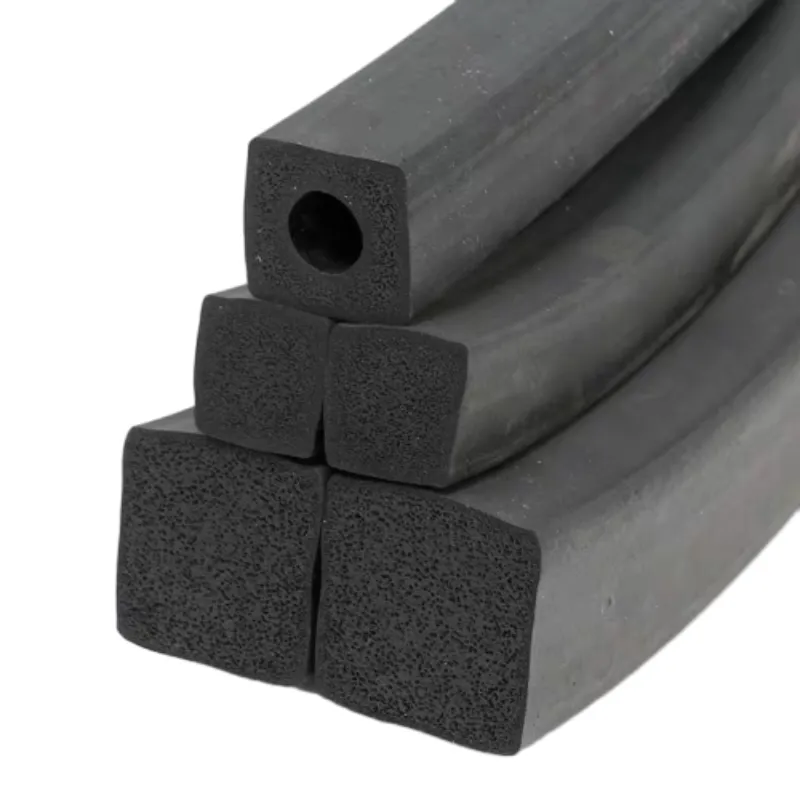
Codes are tightening, energy prices see-saw, and facility teams are under pressure to cut leakage. The Sealing Rubber Strip (also called caulking rubber strip) coming out of Wangshigong Industrial Zone, Wei County, Xingtai City, Hebei Province is getting traction because it blends classic EPDM/silicone performance with better adhesives and more consistent extrusion. Many customers say the biggest surprise is the drop in door whistling and a calmer HVAC profile.
Typical use cases
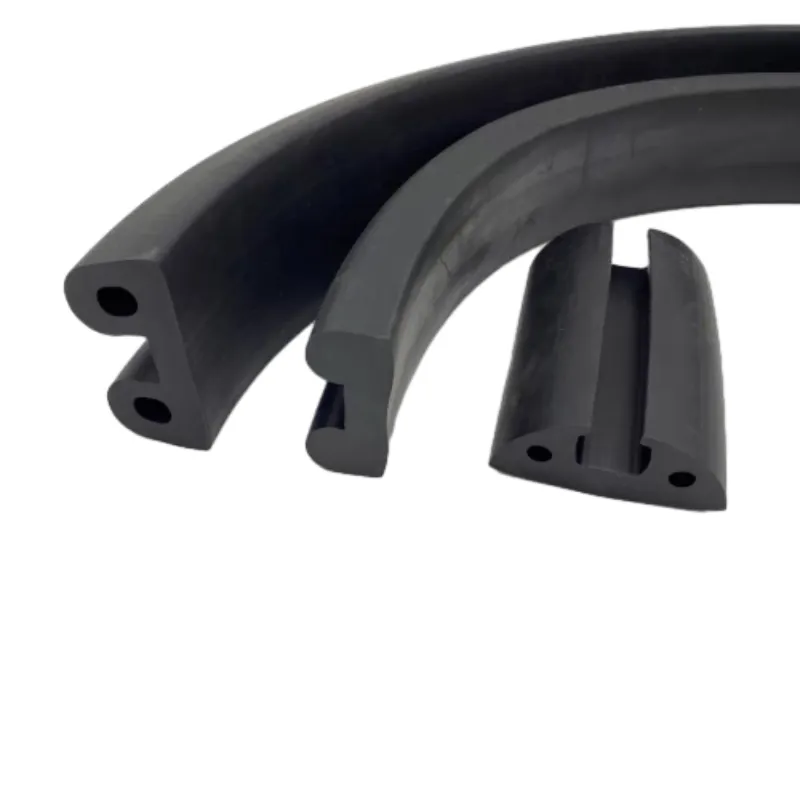
- Exterior swing doors, sliding patio doors, and storefront entries
- Bathrooms, kitchens, windows, and door frames needing vapor/dust control
- Cold rooms and light clean areas (where consistent compression matters)
- Retrofits in multifamily halls where noise and smoke migration are concerns
Product specs (typical)
| Parameter | Spec ≈ | Test Standard |
|---|---|---|
| Material | EPDM / Silicone / NBR (per project) | ASTM D2000 classification |
| Hardness | Shore A 55–70 (±5) | ASTM D2240 |
| Compression set | ASTM D395 | |
| Tensile strength | ≥7 MPa | ASTM D412 |
| Temp range | -40 to +120°C (silicone up to +180°C) | — |
| UV/Ozone | No cracks, 72h | ASTM D1149/D1171 |
How it’s made (short version)
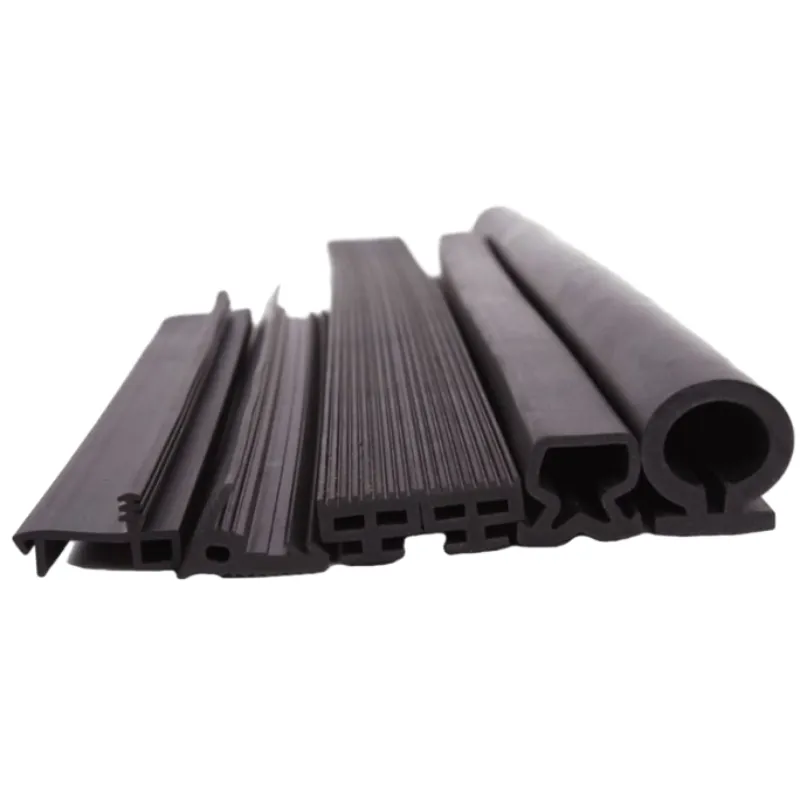
- Materials: EPDM/NBR/silicone compounds with carbon black, curing agents, UV stabilizers.
- Methods: Cold-feed extrusion, optional co-extrusion for bulb + fin, adhesive-backing lamination, vulcanization.
- QA testing: Shore hardness, tensile/elongation, compression set, adhesive peel (ASTM D3330), dimension tolerance.
- Service life: around 8–12 years in typical façades; harsh UV/salt may reduce it (real-world use may vary).
- Industries: residential, commercial, hospitality, light industrial, and retrofit programs.
Field performance and certifications
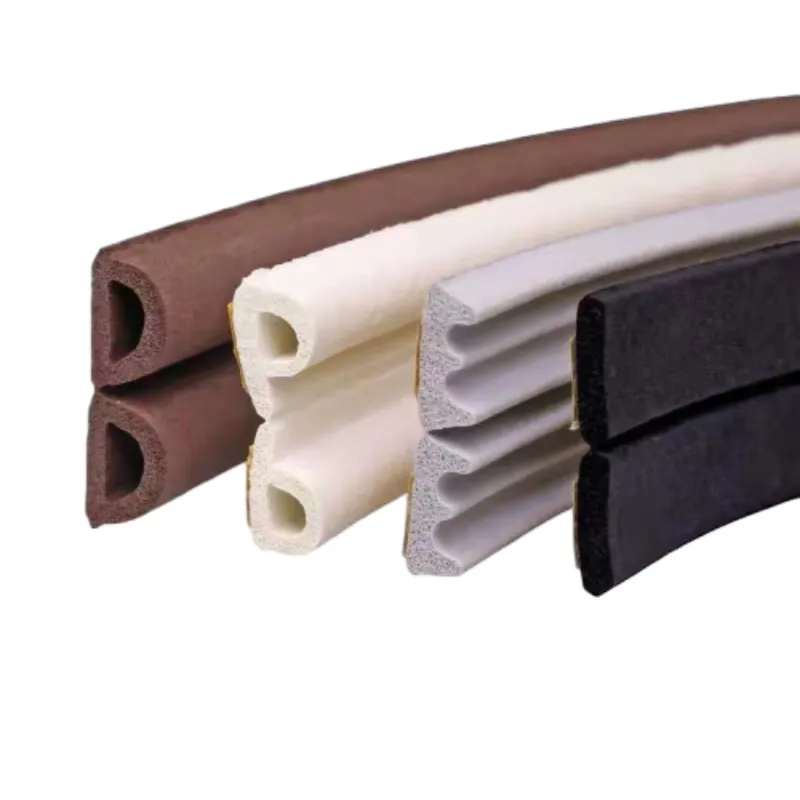
On-site tests show air leakage reductions aligned with ASTM E283 baselines; water penetration checks per ASTM E331 are solid when compression is set correctly. Factories typically carry ISO 9001, and material compliance can be documented for RoHS/REACH upon request. For fire behavior, most profiles target UL 94 HB class; check your jurisdictional requirements.
Vendor snapshot (indicative)
| Supplier | MOQ | Lead time | Customization | Certs |
|---|---|---|---|---|
| QZ Seals (Hebei) | ≈1,000 m | 10–20 days | Profiles, durometer, PSA tape, cut lengths | ISO 9001, RoHS/REACH docs |
| Big-box OEM | Retail packs | Stock | Limited SKUs | Basic compliance |
| Importer (generic) | 2,000–5,000 m | 25–40 days | Moderate | Varies |
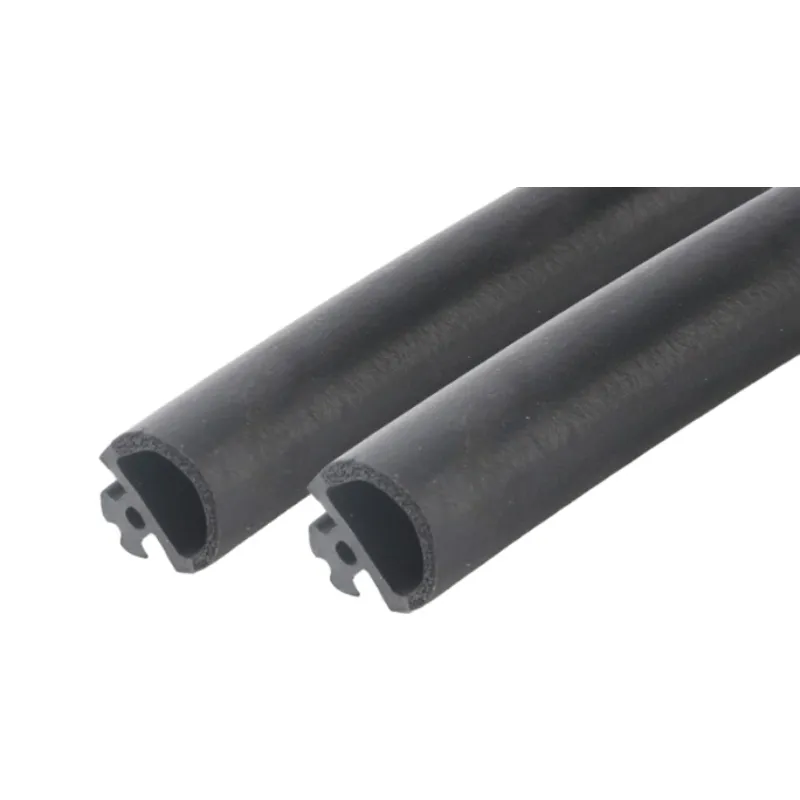
Customization tips
- Choose bulb size to achieve 25–40% compression at closed-door state.
- Pick durometer by door weight and latch force; heavier doors can tolerate 65–70A.
- PSA options: acrylic for longevity; rubber-based for cold installs.
- Color: black for UV, white/gray for interiors; ask for UV-stabilized compounds.
Quick case notes
Multifamily retrofit: 180 doors, EPDM 60A with acrylic PSA. Post-install blower-door showed ≈18% air leakage reduction. Tenants reported less corridor odor transfer—small thing, big quality-of-life win.
Small cold-room door: silicone profile to handle low temps; compression set stayed under 20% after cycling. Energy logbooks hinted at steadier compressor duty.
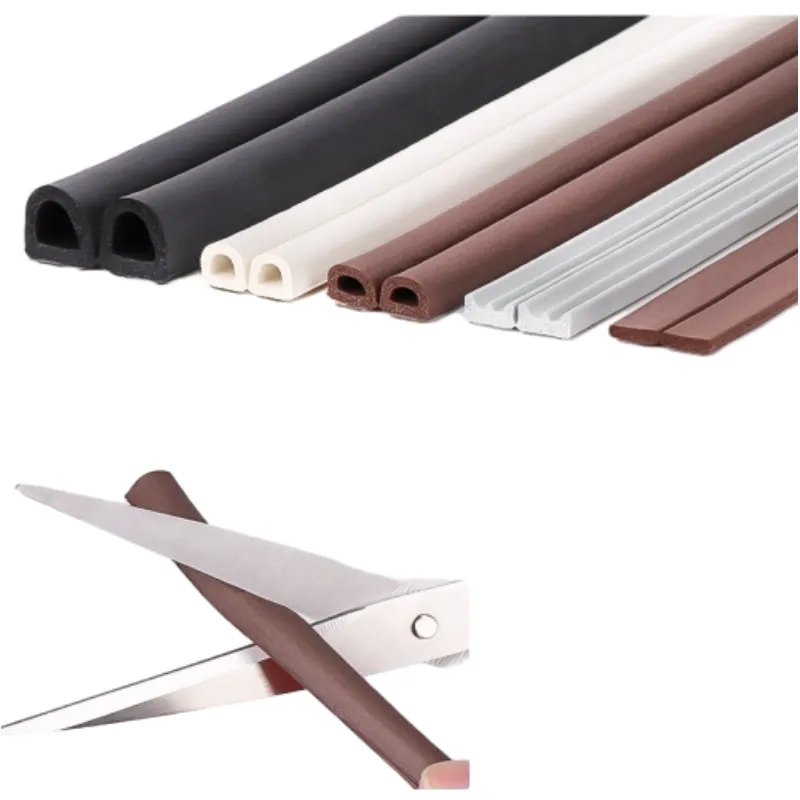
If you’re choosing a weather stripping door profile today, focus on compression geometry, adhesive quality, and proof of testing. And, to be honest, don’t skimp on prep—clean frames mean bonds that last.
References
- ASTM D2000: Standard Classification System for Rubber Products in Automotive Applications.
- ASTM D2240, D395, D412: Rubber hardness, compression set, tensile test methods.
- ASTM D1149/D1171: Rubber deterioration—Ozone/Weathering resistance.
- ASTM E283/E331: Air leakage and water penetration of exterior windows, doors, and curtain walls.
- ISO 9001: Quality management systems—Requirements.
- UL 94: Tests for Flammability of Plastic Materials (HB rating context).
-
Understanding e3 edge banding tape price and Value FactorsNewsApr.16,2026
-
Premium Birch Edge Tape Guide for Professional Furniture FinishingNewsApr.09,2026
-
Comprehensive Guide to 2mm Edge Banding Tape for Furniture and CabinetryNewsApr.07,2026
-
Comprehensive Guide to Choosing the Right 18mm Edge Banding for Your ProjectsNewsApr.04,2026
-
Comprehensive Guide to Pre Glued Melamine Edging Applications and InstallationNewsMar.31,2026
-
Comprehensive Guide to Self Adhesive Edge Banding Tape Applications and SelectionNewsMar.28,2026
-
Comprehensive Guide to Wood Veneer Edging Strips for Furniture and Woodworking ProjectsNewsMar.26,2026