Telephone: +8618730949119
0%

Table of Contents

Look, I’ve been running around construction sites for fifteen years, and let me tell you, things are changing fast. Used to be, you slapped a sweep on the bottom of a door and called it a day. Now? Everyone’s talking about air tightness, energy efficiency, and these fancy new materials. To be honest, it’s a bit much sometimes, but you gotta keep up, right? The whole industry's pushing for better insulation, and that means the external door sweep is getting a lot more attention. We're seeing a real push for those magnetic sweeps now. Seems like everyone wants magnetic.

What's funny is, you spend all this time designing something perfect in the office, but then you get on-site and it’s a completely different story. I encountered this at a factory in Ningbo last time, they’d designed this really complicated sweep with a whole bunch of interlocking parts. Looked great on the drawings, but the installers couldn’t get it to fit straight to save their lives. Simple is usually better, folks. Really, it is.

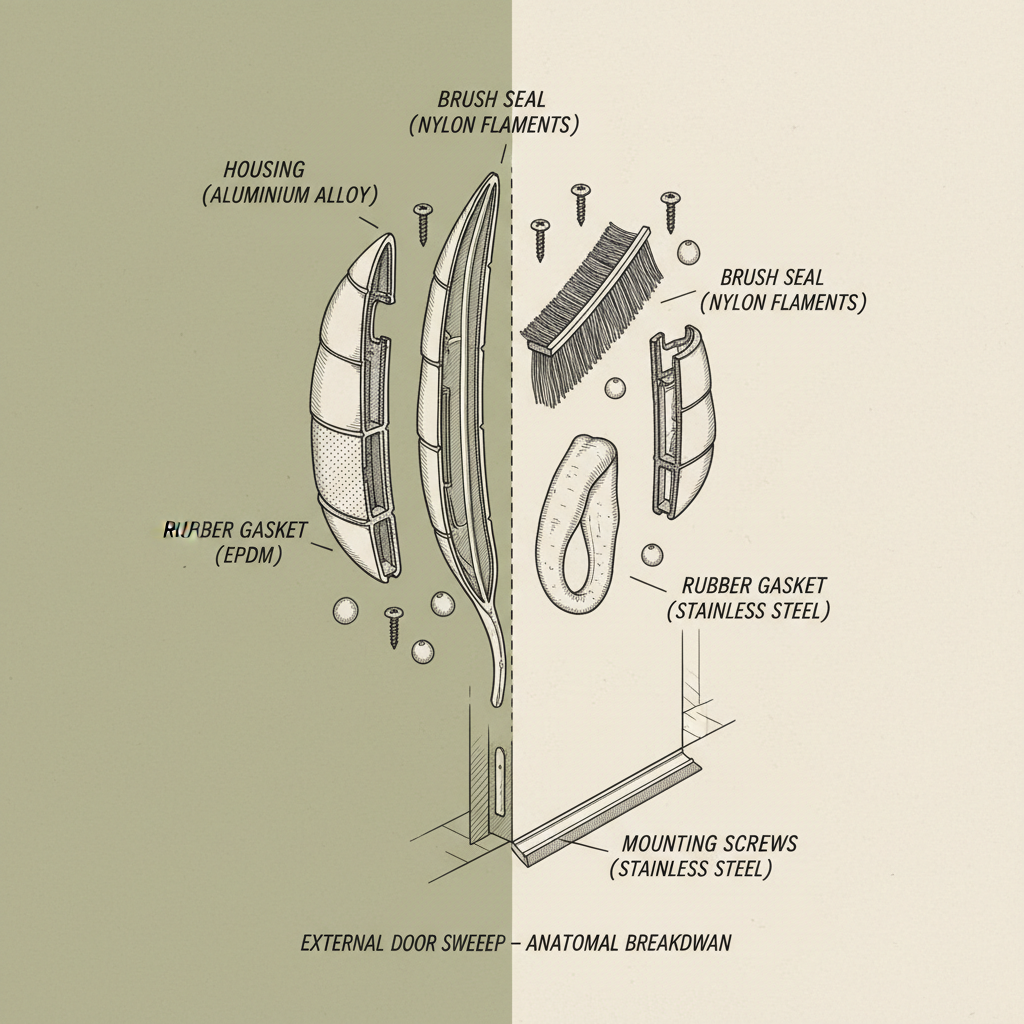
And it's not just about the design. It's about the materials. You have your standard PVC, which is fine, cheap, gets the job done. But have you noticed how brittle it gets in the cold? Snaps like a twig. Then there’s the EPDM rubber. Now that’s a material. It smells a bit…rubbery, obviously, but it’s flexible, durable, and it holds up to the weather. I like working with it, feels solid in your hands. We've been using a lot of silicone lately too, for high-end stuff. That stuff is nice, but it’s pricey.
The Importance of an Effective External Door Sweep for Energy Efficiency

Industry Trends and Design Pitfalls

The Importance of an Effective External Door Sweep for Energy Efficiency

Strangely, the biggest trend right now isn't about new materials, it's about integration. Everyone wants sweeps that blend seamlessly with the door frame, that are almost invisible. Which sounds great, but it adds complexity. I’ve seen too many designs where they try to hide all the hardware, and then it's a nightmare to replace the sweep when it wears out. Simple access for maintenance is critical, people forget that. They're also pushing for more adjustable sweeps, which is good, but again, more parts, more potential failure points.

A big pitfall? Underestimating the expansion and contraction of materials. You design a perfect fit at 20 degrees Celsius, but what happens when it’s -20? That sweep will buckle or crack. You have to account for that. And don't even get me started on the tolerances. Doors aren't all made to the same standard, you know? One door might be a millimeter off, and suddenly your perfectly designed sweep doesn’t fit. It's a constant battle.

Material Considerations: The Feel of the Job

We’ve been doing a lot of testing with TPEs lately. Thermoplastic elastomers. Feels kinda like rubber, but it's recyclable, which is a plus. Still haven’t fully convinced myself they’re as durable as good old EPDM, though. I like the smell of EPDM, honestly. Sounds weird, I know. It's just… reassuring. It smells like something that's built to last. Anyway, I think the key is understanding what each material does well. PVC is cheap and cheerful, EPDM is your workhorse, silicone is for the fancy stuff, and TPE is the promising newcomer.

The backing material is just as important. You can have the best sweep in the world, but if the adhesive is garbage, it’s not going to stick. We used to use a lot of acrylic adhesive, but it didn’t hold up well in humid conditions. Now we’re mostly using polyurethane, it’s much stronger. And it smells less...chemical-y.

One thing I always tell the guys on site is to feel the material. Is it flexible enough? Is it too soft? Does it feel like it’s going to tear easily? You can learn a lot just by getting your hands dirty. You won’t learn that in a lab, trust me.

Real-World Testing and Application

Lab tests are fine, but they don’t tell you the whole story. We do a lot of field testing. We install sweeps in different environments – coastal areas, deserts, cold climates – and then we just…leave them. And we check on them every few months. That’s the only way to really see how they hold up.

We also pay attention to how the installers are using them. Are they struggling with the installation process? Are they cutting the sweeps incorrectly? Are they using the right tools? Because if the product is difficult to install, it doesn’t matter how good it is, people will find a way to mess it up. Later… Forget it, I won’t mention it.

We even look at how people walk through the doors. Sounds silly, but it matters! If people are constantly dragging their feet, it’s going to wear down the sweep faster. You learn a lot just by observing.

Advantages, Disadvantages, and Customization

The biggest advantage of a good external door sweep? Energy savings, plain and simple. It stops drafts, keeps the heat in, and lowers your energy bills. It also keeps the bugs out, which is nice. But the disadvantages? Well, they can be a pain to install, as we’ve already discussed. And they do wear out over time. Especially the cheaper ones.

Customization is becoming more and more common. We had a client who needed a sweep with a specific color to match their door frame. No problem, we can do that. We’ve also done sweeps with integrated LED lighting for safety. That was a fun project. The most unusual request I ever got was from a guy who wanted a sweep that would automatically retract when he approached the door with his groceries. I told him that was a bit overkill.

External Door Sweep Performance Metrics


Customer Stories from the Field

Last month, that small boss in Shenzhen who makes smart home devices insisted on changing the interface to on a batch of our sweeps, thinking it would be more “high-tech”. Turns out, his installers didn’t have the right tools, and they ended up stripping all the screws. Had to ship him a whole new set of tools, plus a bunch of replacement sweeps. Cost him a fortune, and delayed his project by a week. Lesson learned: don’t change things just for the sake of changing them.

Another time, a hotel in Florida needed sweeps that could withstand saltwater corrosion. We ended up using a special grade of EPDM with a UV-resistant coating. It wasn’t cheap, but it saved them a lot of money in the long run.

Practical Application Scenarios

You see these things everywhere, right? Residential homes, commercial buildings, hotels, hospitals… They’re all using external door sweeps. But there are some specific scenarios where they’re particularly important. Like in data centers, where maintaining a consistent temperature is critical. Or in hospitals, where you want to prevent the spread of germs.

We’ve also been working with some companies that are building passive houses. Those houses are designed to be incredibly energy-efficient, and every detail matters. The door sweep has to be absolutely perfect, otherwise you’re losing all that efficiency.

And don't forget about industrial applications. Warehouses, factories… These places need durable sweeps that can withstand heavy traffic and harsh conditions.

Performance Metrics and Comparison

I’m not a big fan of getting bogged down in numbers, but some metrics are useful. Air leakage rate is one. You want a sweep that minimizes air leakage. Durability is another. How long will it last before it needs to be replaced? Cost, of course, is always a factor. But you have to balance cost with performance.

Here’s a rough comparison, just something I scribbled down on a napkin the other day:

Ultimately, whether this thing works or not, the worker will know the moment he tightens the screw.

Key Performance Indicators for Common External Door Sweep Materials

Material Type Air Leakage (CFM/ft) Durability (Years) Cost (per foot)
PVC 2.5 3-5 $0.50
EPDM Rubber 0.8 7-10 $1.20
Silicone 0.5 10-15 $2.50
Magnetic Sweep 0.6 5-8 $1.80
TPE 1.0 6-9 $1.00
Brush Sweep 3.0 2-4 $0.30

FAQS

What’s the best external door sweep material for a high-traffic entryway?

For high-traffic areas, EPDM rubber is usually your best bet. It’s incredibly durable and can withstand a lot of abuse. Silicone is also good, but it’s more expensive. PVC will wear out quickly, and brush sweeps… well, they’re just not up to the task. The key is to choose something that can bounce back from constant use. You don't want it getting crushed and losing its effectiveness after a few months.

How do I install an external door sweep correctly?

Read the instructions! Seriously. Most sweeps come with detailed installation guides. Make sure the door is clean and dry before you start. Cut the sweep to the correct length, and use a good quality adhesive. And don't over tighten the screws. You want it snug, but you don't want to strip the threads. If you’re unsure, call a professional. It's better to pay a little extra than to mess it up and have to replace the whole thing.

Can I paint an external door sweep?

It depends on the material. PVC and EPDM can usually be painted, but you need to use a paint that’s specifically designed for rubber or plastic. Silicone is more difficult to paint, and you may need to use a primer first. Brush sweeps…don’t bother. The paint will just flake off. Always test the paint on a small, inconspicuous area first to make sure it doesn’t damage the sweep.

How often should I replace an external door sweep?

That depends on the traffic and the weather conditions. Generally, you should inspect your sweeps at least once a year. If they’re cracked, torn, or compressed, it’s time to replace them. A good quality EPDM sweep should last at least 5-7 years, but cheaper sweeps may need to be replaced more often. Ignoring a worn-out sweep will lead to higher energy bills, and potentially water damage.

What’s the deal with magnetic door sweeps? Are they worth the extra cost?

Magnetic sweeps are nice, they seal really well. They're pricier, though, and sometimes they can interfere with electronic locks. Plus, you gotta make sure the door frame is metal! They’re a good option for high-security applications, or for people who just want the best possible seal. But for most residential applications, a good quality EPDM sweep will do the job just fine.

Are external door sweeps helpful for soundproofing?

They can help, but don't expect miracles. They’ll reduce the amount of sound that leaks through the gap under the door, but they won’t block out all the noise. For serious soundproofing, you need to address other areas, like the door itself, the walls, and the windows. A sweep is just one piece of the puzzle. Think of it as a small but helpful contribution.

Conclusion

So, there you have it. External door sweeps aren’t glamorous, but they’re important. They save energy, keep out pests, and make your life a little more comfortable. The industry is constantly evolving, with new materials and designs emerging all the time. But at the end of the day, the most important thing is to choose a sweep that’s durable, reliable, and easy to install.

Don’t get caught up in the hype. Focus on the fundamentals. And remember, whether this thing works or not, the worker will know the moment he tightens the screw. Check out our range of high-quality external door sweeps at www.qzseals.com.


Robert Johnson

Robert Johnson

Robert Johnson is a leading Research and Development Engineer at Hebei Qiuzhuo Rubber Products Co., Ltd. With a PhD in Polymer Chemistry, Robert is instrumental in developing new rubber formulations and improving existing product performance. He specializes in custom compound development, working closely with clients to create materials optimized for
Previous Navigating the World of Exterior Door Sweeps and Installation Challenges
Next Exploring Different types of bottom garage door seals and Performance Considerations